

























America has a very long loved tradition every year letting a furry friend determine when we will see spring. On Ground Hogs day, the ground hog Punxsutawney Phil, will either see his shadow or won’t. If he sees his shadow then that means we have six more weeks of winter. Earlier this week thats exactly what happened. The annual event in Punxsutawney, Pennsylvania is colorful and festive, with crowds gathering before noun and members of Phil’s Inner Circle wearing top hats to announce the result.
Even tho Phil saw six more weeks of winter and America talks about what this day really means of if it means anything at all.

For many people, Groundhogs Day has become more of a joke than a real tool. There is even a movie all about the day. But most are in disbelief of the Phil’s abilities. El-Balad explained that Groundhog Day “has grown from a local curiosity to a global spectacle,” emphasizing tradition over actual weather forecasting. And the science agrees: real weather experts do not consider a groundhog’s behavior a reliable weather forecast.
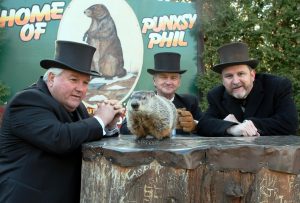
Countless analyses of past Groundhogs Day predictions show that Phil’s track record is shaky at best. Even the National Oceanic and Atmospheric Administration (NOAA) — one of the most authoritative sources on U.S. weather — places Phil’s historical accuracy at only around 35–40 percent, which is worse than random chance and far below professional forecasts. In contrast, other animal “forecasters” such as Staten Island Chuck have accuracy rates above 80 percent, highlighting how unreliable the groundhog tradition really is.
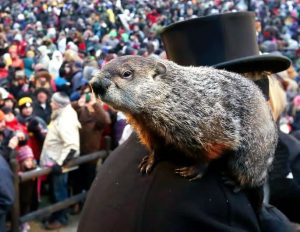
So why does Groundhog Day exist? Partly because people enjoy the tradition and the sense of community it brings. USA Today captured this spirit by showing how thousands still tune in and gather for Phil’s moment in the spotlight.
In the end, while Phil’s 2026 prediction pointed to “six more weeks of winter,” that outcome is more myth than truth. It’s a charming tradition that gives winter a face and a story but it shouldn’t be mistaken for a weather forecast backed by science.
